Search "Best CRM software for small businesses in Ghana " and you'll get thousands of results.
Most of them are built for sales teams in offices you've never seen, with features you'll never use, priced in dollars for a market that isn't yours.
That's part of why so many small business owners in Ghana never end up choosing one.
Not because they don't need it — because everything on offer feels built for someone else's business.
This guide skips the noise and focuses on what actually matters when you're choosing CRM software as a small business in Ghana.
Quick answer
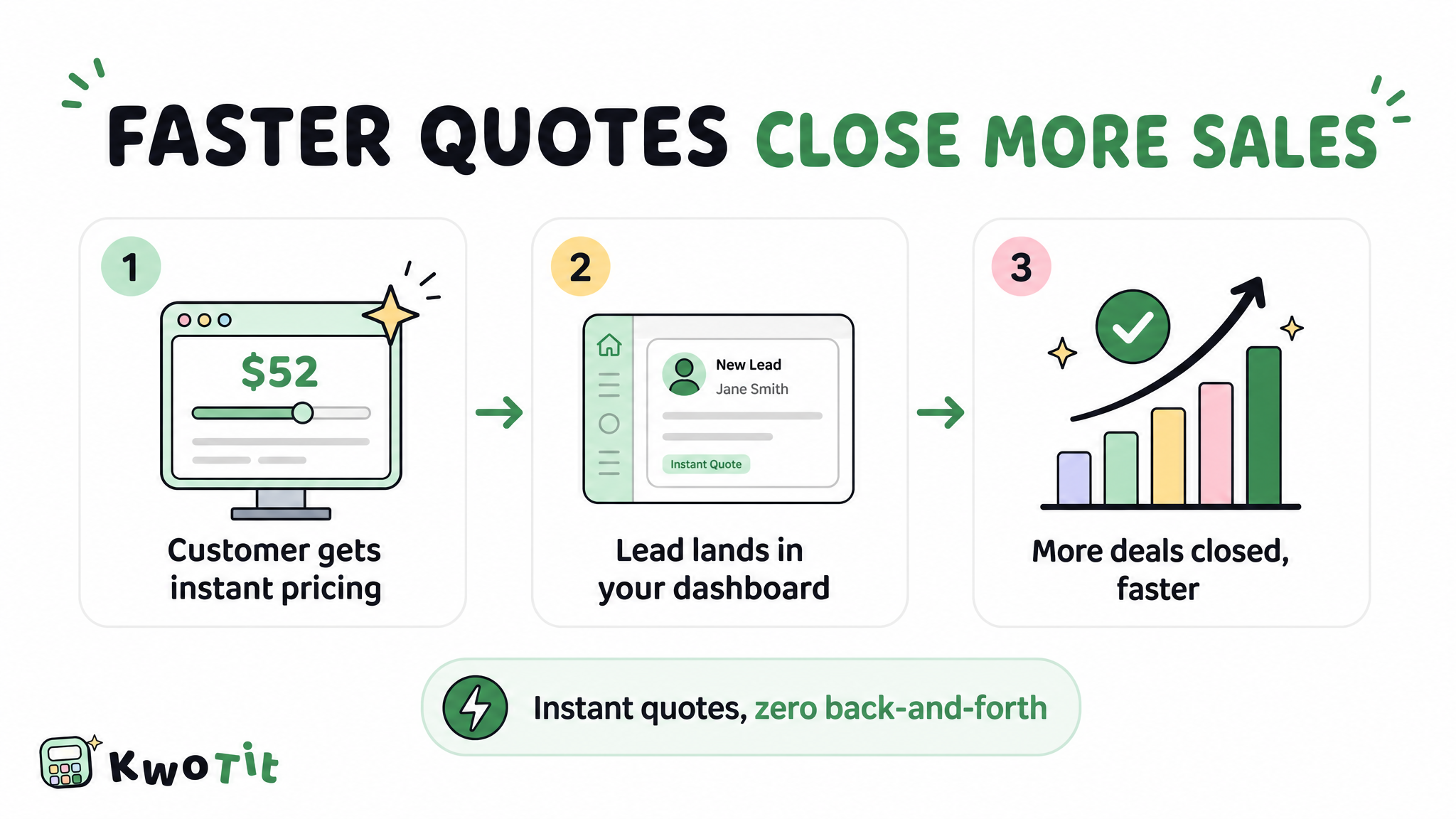
The best CRM software for a small business in Ghana does four things well: captures enquiries from WhatsApp, calls, and website forms in one place; tracks a simple sales pipeline from enquiry to paid job; stores searchable customer information; and reminds you to follow up. Look for mobile-first design, WhatsApp-friendly workflows, quotation tracking (not just generic "deals"), local cedi pricing, and low setup time. Generic global CRM systems are usually built around sales teams and multi-stage approvals, which is the wrong shape for a one- or two-person service business. KwoTit is a CRM built around this exact shape — quoting, WhatsApp-friendly enquiry capture, and a simple pipeline for African service businesses.
What the best CRM software in ghana actually needs to do:
Strip away the marketing language, and a CRM has one job: keep track of who your customers are, what they want, and what needs to happen next.
Everything else is a feature, not the point.
For a small business, that usually means:
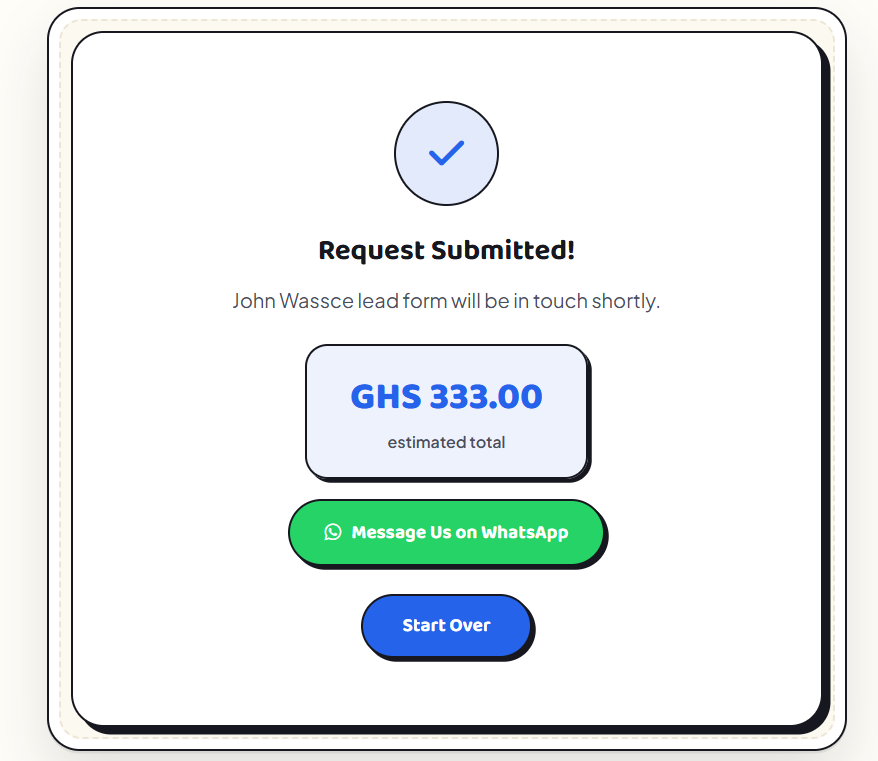
Capturing enquiries. Whether they come through WhatsApp, a phone call, a walk-in, or a website form, they should land somewhere that isn't your memory.
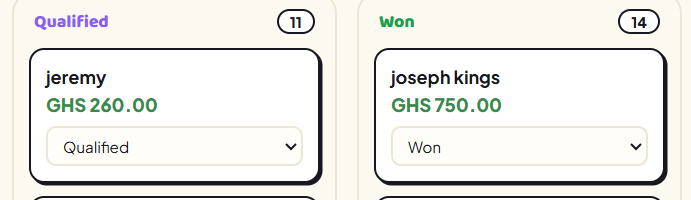
Tracking the sales process. New enquiry, contacted, quotation sent, follow-up, won or lost. A simple pipeline, not a complicated one.
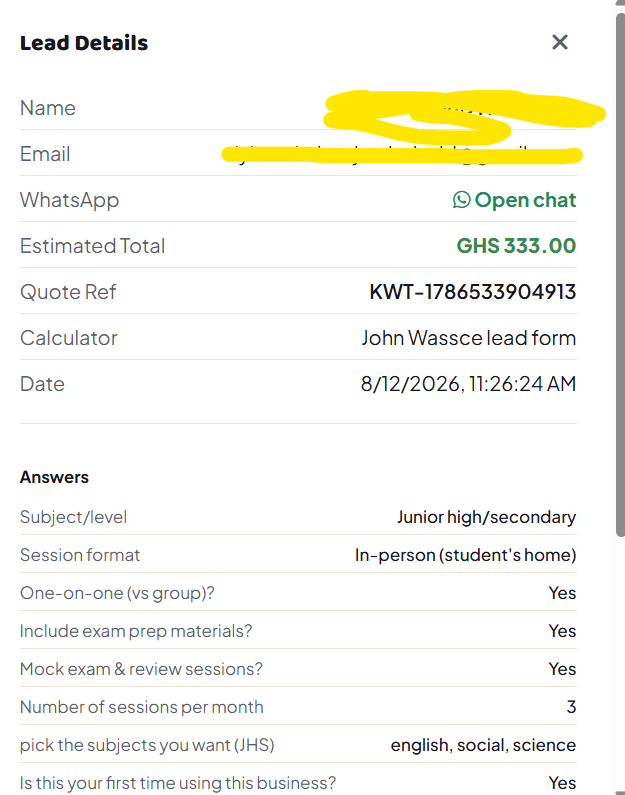
Storing customer information. Names, numbers, past orders, notes — searchable, not buried in old chats.
Reminding you to follow up. Most lost sales aren't lost to a competitor. They're lost to silence.
If a CRM does these four things well, it's already more useful than most of what's marketed to small businesses.
Why generic "CRM systems" often don't fit
A lot of well-known CRM systems are built around a sales team, a sales manager, and a sales process with several stages of approval.
That's the wrong shape for a business run by one or two people who also do the actual work — the printing, the tailoring, the electrical job, the event.
The result is a tool that takes weeks to set up properly, and gets abandoned within a month because it demands more admin time than it saves.
The right question isn't "which CRM has the most features?"
It's "which CRM fits how I actually run my business?"
What the best CRM software for small businesses in Ghana should have:
1. WhatsApp-friendly workflows
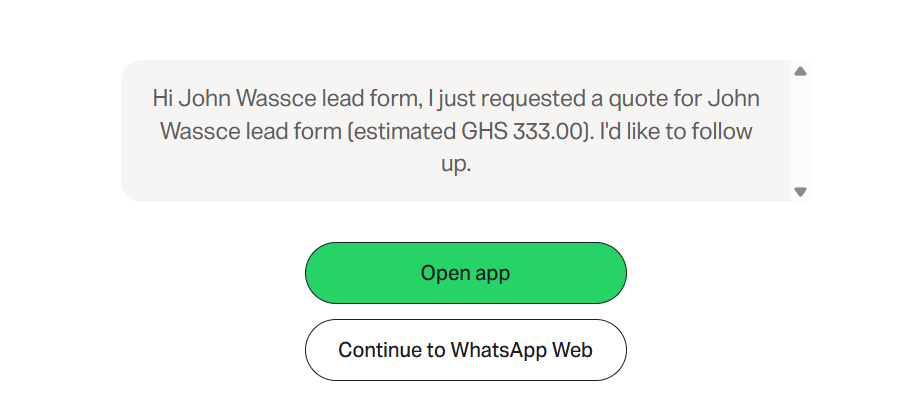
If most of your customers reach you on WhatsApp, your CRM should work with that reality, not against it. Capturing an enquiry shouldn't mean retyping a conversation into a separate system by hand.
2. Mobile-first design
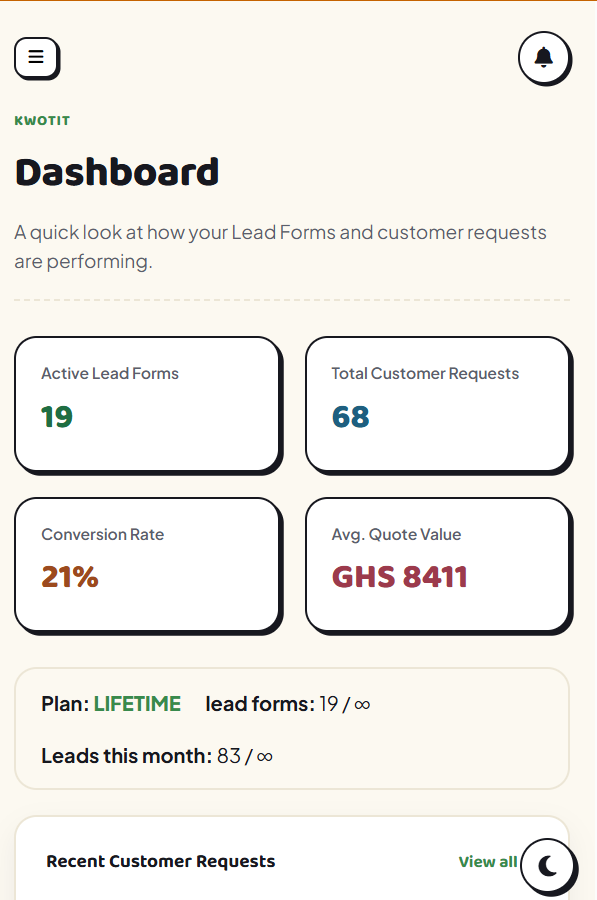
Small business owners in Ghana are often working from a phone, not sitting at a desk with a laptop open all day. A CRM that only works well on desktop will get used less and less over time.
3. Simple, local pricing
You shouldn't need an enterprise budget or a foreign card to manage your customers properly. Look for pricing in cedis, with a plan that matches the size of your business today, not the business you might have in five years.
4. Quotation and follow-up tracking
If your business runs on enquiries and quotes — services, custom orders, installations — your CRM should track quotations specifically, not just generic "deals."
5. Low setup time
A CRM you can start using the same day beats a powerful one that takes a week to configure. If it needs a manual to get started, that's a warning sign for a small team.
Free CRM software: worth it?
There are free CRM tools available, and some are genuinely useful for a very small business.
But free often comes with limits — on the number of customers, the number of users, or the features you can actually use before being asked to upgrade.
Before choosing a free option, ask:
Can I actually run my business inside this, or will I outgrow it in three months?
A CRM built specifically for how African service businesses operate — quotations, WhatsApp, mobile-first — is often more useful long-term than a generic free tool built for a different market.
A CRM should make your business simpler, not busier
The best CRM software for a small business in Ghana isn't the one with the longest feature list.
It's the one that helps you stop losing track of customers without adding a second full-time job of data entry.
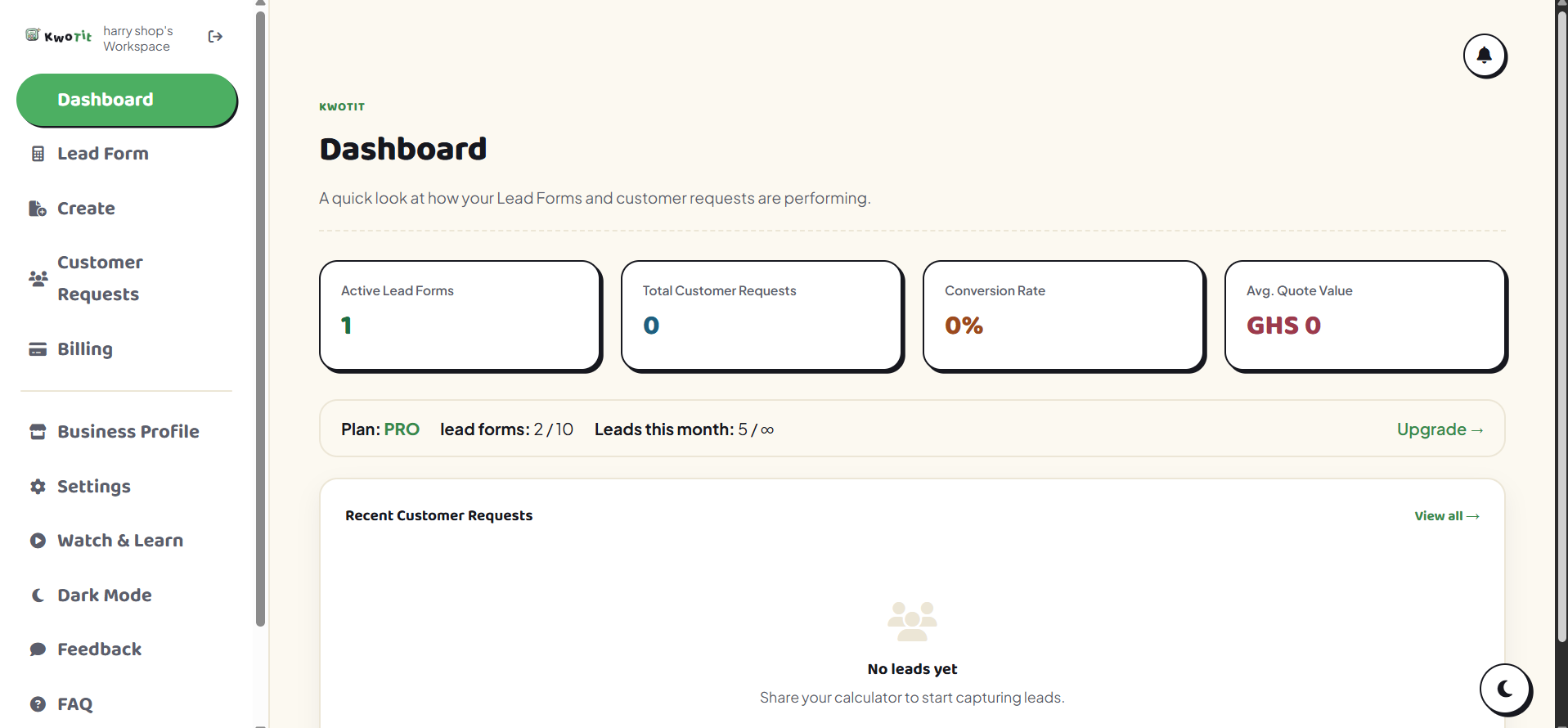
If you're currently managing enquiries across WhatsApp, notebooks and memory, the KwoTit CRM is built specifically for that — 21-day money back guarantee , set up in minutes.
Frequently Asked Questions
What should the best CRM software for small businesses in Ghana include? It should capture enquiries from WhatsApp, calls, and website forms; track a simple sales pipeline; store searchable customer information; and remind you to follow up. WhatsApp-friendly workflows, mobile-first design, local cedi pricing, quotation tracking, and low setup time matter more than a long feature list.
Is there a free CRM software for small businesses in Ghana? Some free CRM tools exist and can work for a very small business, but they usually cap the number of customers, users, or features before asking you to upgrade. It's worth checking whether you can actually run your business inside the free tier or will outgrow it within a few months.
Does CRM software work with WhatsApp in Ghana? Not all of it does. Many global CRM platforms assume enquiries come through email or web forms. If most of your customers reach you on WhatsApp, look specifically for a CRM built to capture and track WhatsApp enquiries rather than requiring manual re-entry.
Why don't generic global CRM systems work well for small businesses in Ghana? Most well-known CRM systems are built around sales teams with multiple approval stages, which is the wrong shape for a business run by one or two people who also do the actual work. That mismatch usually means a longer setup time and a tool that gets abandoned within a month.
What's the best CRM for a solo or small service business in Ghana? It depends on how the business runs, but for enquiry-to-quote-to-payment workflows specifically, a CRM built for that shape — like KwoTit — tends to fit better than a generic sales CRM designed for larger teams.