

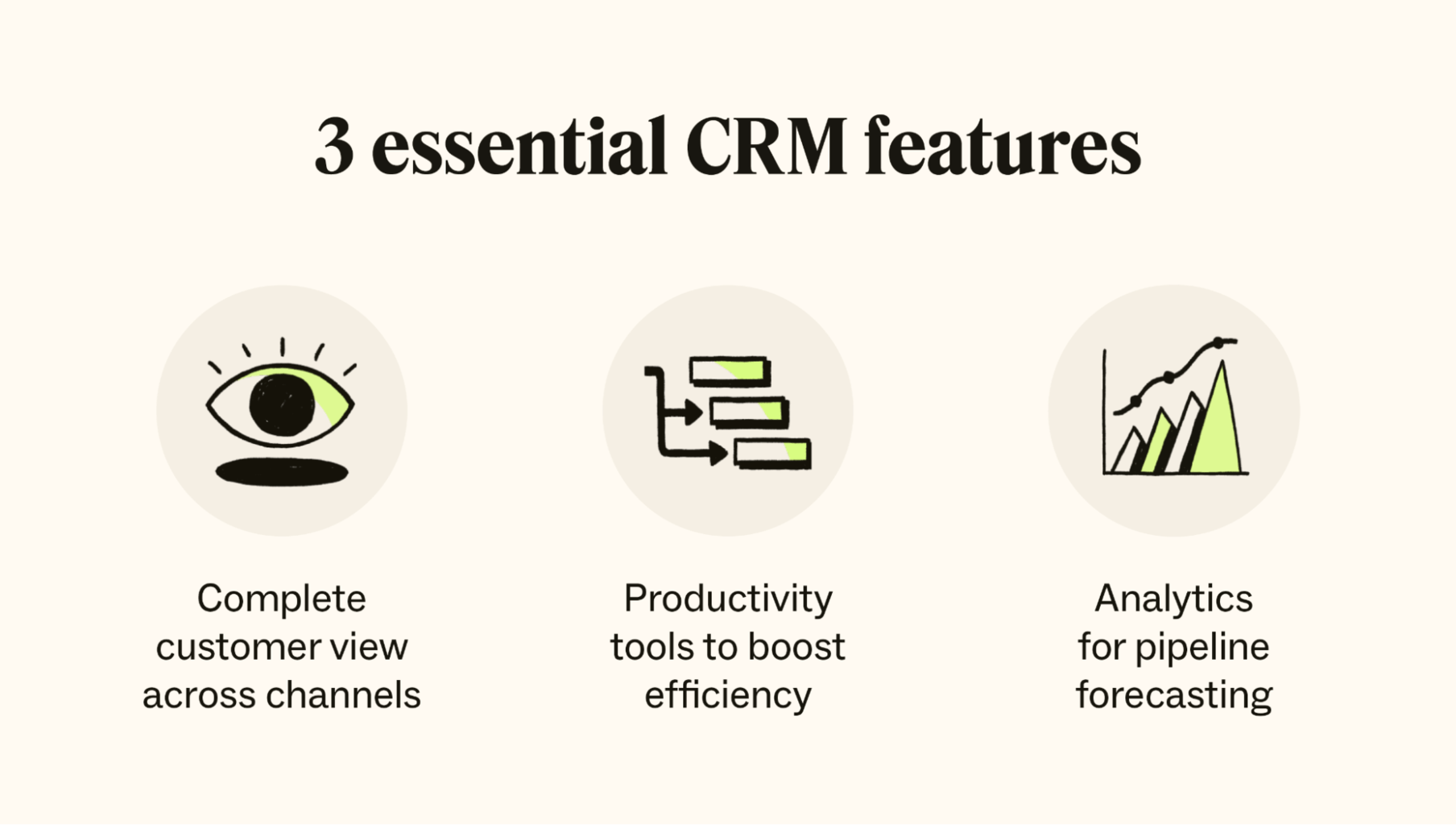
Photo credit : zendesk
For many small businesses across Africa, WhatsApp has become the customer service desk.
A customer sends a message.
Someone replies.
The customer asks for a price.
A quotation is sent.
The customer says, "Let me get back to you."
Then another 20 messages arrive.
A few days later, the business owner remembers the customer — but cannot remember what they wanted.
This is one of the problems that CRM software for small business is designed to solve.
What is a CRM?
CRM means Customer Relationship Management.
A CRM system helps a business organise information about its customers and potential customers.
Instead of keeping everything in your head, WhatsApp chats, notebooks and spreadsheets, you have a structured place to manage your customer relationships.
For a small business, this does not need to be complicated.
A useful CRM can help you:
- Capture new customer enquiries
- Store customer information
- Track leads
- Record notes
- Track quotations
- Follow up with customers
- See which enquiries became customers
- Organise your sales process
The goal is simple:
Know who your customers are, what they need and what needs to happen next.
Why WhatsApp alone can become a problem
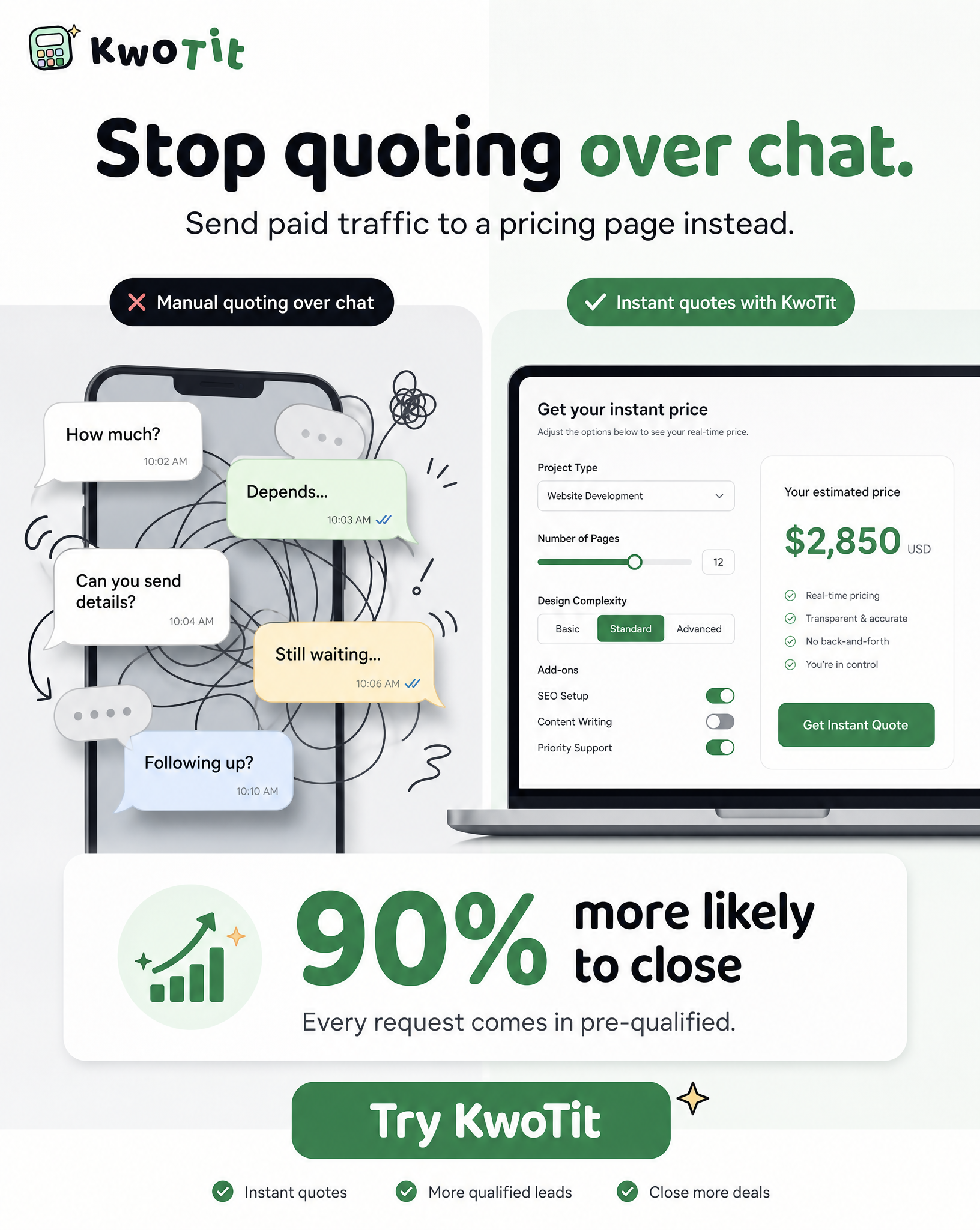
WhatsApp Business is a very useful tool for small businesses across Africa.
It is fast, familiar and convenient. For many businesses, it is one of the main ways customers ask questions, request prices and place orders.
But a chat inbox is not the same thing as a CRM system.
Imagine you run a printing business in Accra.
One customer asks for 100 branded T-shirts.
Another wants business cards.
Another wants a banner.
Another wants packaging.
Another asks for a quotation and says they will confirm next week.
You may be able to handle this when the business is small.
But as enquiries increase, important conversations can disappear in the noise.
The same situation can happen to a fashion business in Lagos, a furniture maker in Kumasi, a branding company in Abuja or a service business in Nairobi.
The problem is not WhatsApp.
The problem is using a communication tool as your entire customer management system.
What does a CRM for small business actually do?
A good small business CRM like the KwoTit CRM gives every enquiry somewhere to go.
For example:
New enquiry
↓
Contacted
↓
Quotation sent
↓
Follow-up
↓
Won or lost
Now you can see what is happening without opening dozens of conversations.
You can also add information about the customer and keep notes about the enquiry.
This is much easier than trying to remember everything.
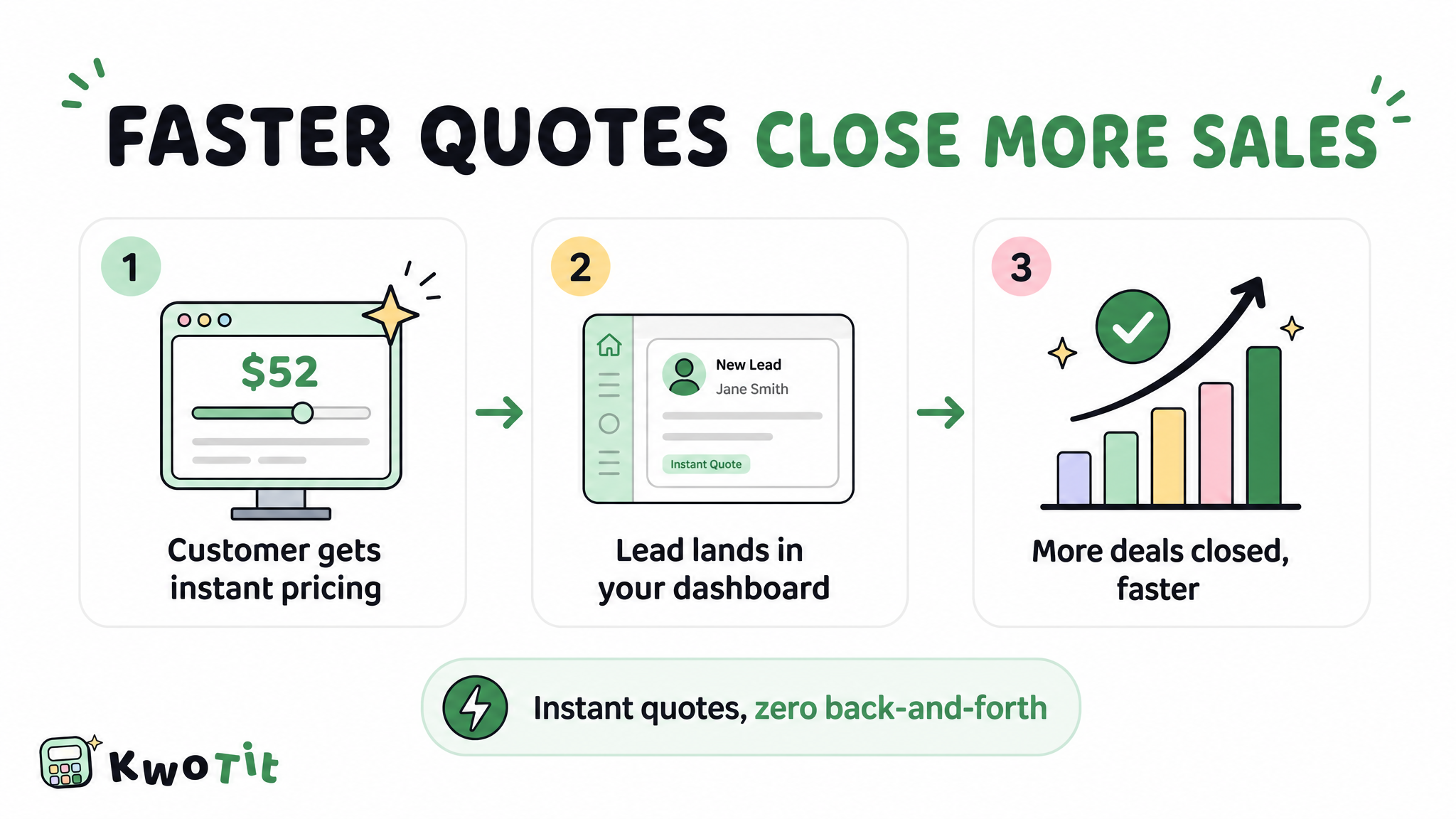
For businesses that work mainly through enquiries and quotations, this simple structure can make a big difference.
That is the idea behind KwoTit: giving small businesses a simple way to capture enquiries, manage customers and keep track of what happens after someone asks for a price.
Do small businesses really need CRM software?
Not every business needs a CRM.
If you receive five enquiries a month, your current system may be enough.
You should consider CRM software when your current process starts causing problems.
For example:
- You forget to follow up with customers.
- You lose track of quotations.
- Customer information is scattered.
- You receive many enquiries through WhatsApp.
- You cannot easily tell which leads became customers.
- You have multiple people handling enquiries.
- You spend too much time searching through old chats.
At that point, the question is no longer:
"Do I need a CRM?"
It becomes:
"Can I afford to keep managing customers this way?"
What should you look for in a small business CRM?
You do not need the most expensive CRM.
You need one that fits your business.
Look for these basic features:
1. Lead management
You should be able to see your new and existing enquiries.
2. Customer records
You should be able to store useful customer information and find it quickly.
3. Follow-up management
The system should help you know which customers need attention.
4. Notes
You should be able to record important details about an enquiry.
5. Mobile access
Small business owners are often working from their phones, not sitting behind a desk all day.
6. WhatsApp-friendly workflows
If most of your customers contact you through WhatsApp, your CRM should fit into that workflow.
7. Simple pricing
A small business should not need an enterprise budget to manage its customers properly.
What about free CRM software for small business?
There are free CRM tools available, and they can be useful.
But free does not always mean suitable.
Some free CRM systems limit the number of customers, users, features or integrations you can use.
Others are designed primarily for larger sales teams.
Before choosing a free CRM, ask yourself:
Can I actually use this system to manage the way my business works?
A simple CRM that solves your problem can be more useful than a powerful CRM that takes weeks to understand.
CRM does not replace WhatsApp
You do not necessarily need to choose between WhatsApp Business and a CRM.
They can serve different purposes.
WhatsApp is where you communicate.
Your CRM is where you organize the customer relationship.
For a small service business, that can mean:
Customer sends an enquiry → lead is captured → quotation is prepared → customer is followed up → sale is completed.
The important thing is that the enquiry does not disappear after the conversation.
When should you start using a CRM?
Do not wait until your business has hundreds of customers.
Start when your existing process begins to break.
If you are regularly asking:
"What happened to that customer who asked for a quotation?"
or:
"Did I follow up with them?"
or:
"Which customers are still waiting for a response?"
then you already have a customer-management problem.
You may need a CRM.
A CRM should make your business simpler
This is the part many CRM companies get wrong.
Small businesses across Africa do not need software that makes them feel like they are running a multinational corporation.
They need software that helps them run their actual business.
A furniture maker in Ghana, a fashion business in Nigeria or a service business in Kenya may have very different products, but they can face the same problem:
Too many customer enquiries and not enough structure.
If your business gets most of its enquiries through WhatsApp, your CRM should work around that reality.
If you sell services through quotations, your CRM should help you manage those enquiries.
If follow-ups are your biggest problem, your CRM should make follow-ups easier.
The software should adapt to the business.
Not the other way around.
Final thoughts
The best CRM for a small business is not necessarily the most popular CRM or the one with the longest list of features.
It is the one that helps you manage your customers without creating more work.
For many small businesses across Africa, that starts with a simple problem:
Too many customer conversations and not enough structure.
If WhatsApp is becoming your entire customer management system, it may be time to give those customer relationships a proper workflow.
That is what CRM is really about.