
Photo credit: Pngtree
Full disclosure: KwoTit is our product. We mention it in this guide because it solves one problem in this business: unqualified leads. You can follow every other step without it.
Quick answer
To start an events planning business in Ghana, do seven things:
- Pick one or two niches, such as weddings or funerals.
- Register your business with the Registrar General's Department.
- Get a Tax Identification Number (TIN) from the Ghana Revenue Authority (GRA).
- Build a list of trusted vendors.
- Learn your costs and set your prices.
- Promote your work online and in vendor groups.
- Screen leads before you spend time on quotes.
Most new planners fail at step 7. They answer every enquiry and lose hours on people who never pay. A lead form that shows a price first fixes this.
What is event planning?
Event planning is the work of organizing an event from start to finish. An event planner sets the date, chooses the venue, manages the budget, hires vendors, and coordinates the activities on the day.
In Ghana, common event types include:
- Weddings and engagement ceremonies
- Funerals and memorial services
- Birthday parties and naming ceremonies
- Corporate events, launches, and conferences
- Graduations and church programs
Step 1: Find your niche
A niche is the type of event you focus on. Pick one or two.
You cannot do every job well. Even a team gets tired when it accepts every request. A narrow focus also makes you easier to remember and to refer.
Before you choose, research three things:
| Question | Why it matters |
|---|---|
| How many people in your area book this event type? | This is your demand. |
| How often does this event happen? | This is your repeat work. |
| What budget do clients usually have? | This is your profit. |
Weddings and funerals often have larger budgets than other event types. They also have many vendors and many details. Do your own research for your city before you decide.

Step 2: Register your business
Register your business before you take big jobs. A registered business is easier to trust. Clients, venues, and corporate buyers often ask for proof of registration.
In Ghana, the usual path is:
- Choose a structure. The common options are sole proprietorship, partnership, and limited liability company.
- Register with the Registrar General's Department (RGD). You can start on their online portal.
- Get your TIN from the Ghana Revenue Authority (GRA). You need it to file and pay tax.
- Ask your local Municipal or District Assembly about a business operating permit.
Rules and fees can change. Check the current requirements with the RGD and the GRA before you apply.
You do not need a physical shop. A registered business that pays tax shows clients that you are serious.

Step 3: Build your vendor list
Your vendors make or break your events. A planner depends on caterers, decorators, DJs, MCs, photographers, tent and chair hire, and venues.
- Keep at least two vendors for each service. If one is not free, you have a backup.
- Record each vendor's price, contact, and past performance.
- Pay on time. Good vendors work first with planners who pay on time.
Step 4: Learn your costs and set your prices
Make a price list for each event type. Include these costs:
- Vendor costs
- Transport and logistics
- Your own time
- Staff on the day
- A buffer for changes
Then add your profit. Do not guess. A job that looks good on paper can lose money when you forget small costs.
Step 5: Promote your business
If people do not know about your business, they cannot hire you. Start with free options:
- Join groups for event vendors and planners.
- Post your past events on Facebook, Instagram, and X.
- Ask happy clients for reviews and photos.
- Write short blog posts that explain your services.
You can also run paid ads. Ads bring more enquiries. But ads can also bring many people who do not plan to hire you. They ask for prices, read them, and disappear.

Step 6: Screen your leads
A lead is a person who asks about your service. Not every lead is a real client.
You can answer every enquiry yourself. Many planners do. But this takes many hours each week. It also adds WhatsApp stress to a job that is already stressful.
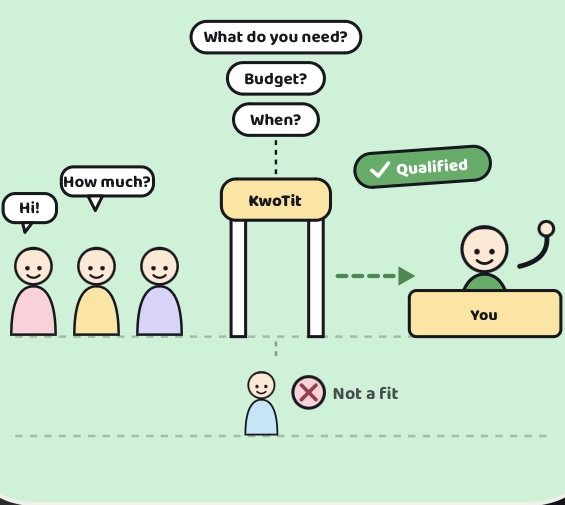
A better way is lead pre-qualification. This means you ask a few questions first and show a price range. Only serious people continue.

What is lead pre-qualification?
Lead pre-qualification is a check that happens before you send a quote. The lead answers questions about the event. These can include the date, the number of guests, and the budget. The lead then sees a price estimate.
Some leads leave at this point. This is good. They were not a fit, and you did not lose any time.
How KwoTit helps
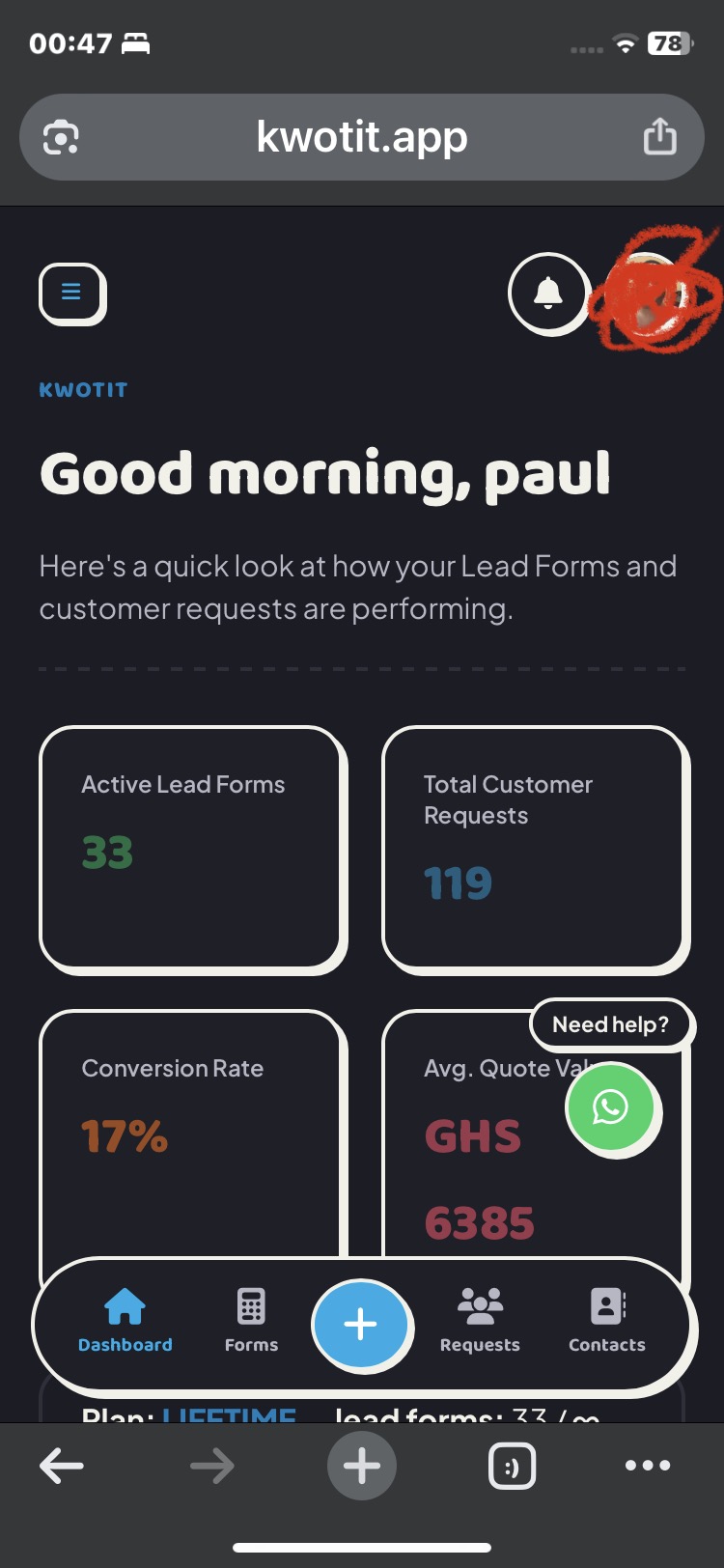
KwoTit is a CRM for service businesses in West Africa. A CRM is a tool that keeps track of your customers. With KwoTit, you can:
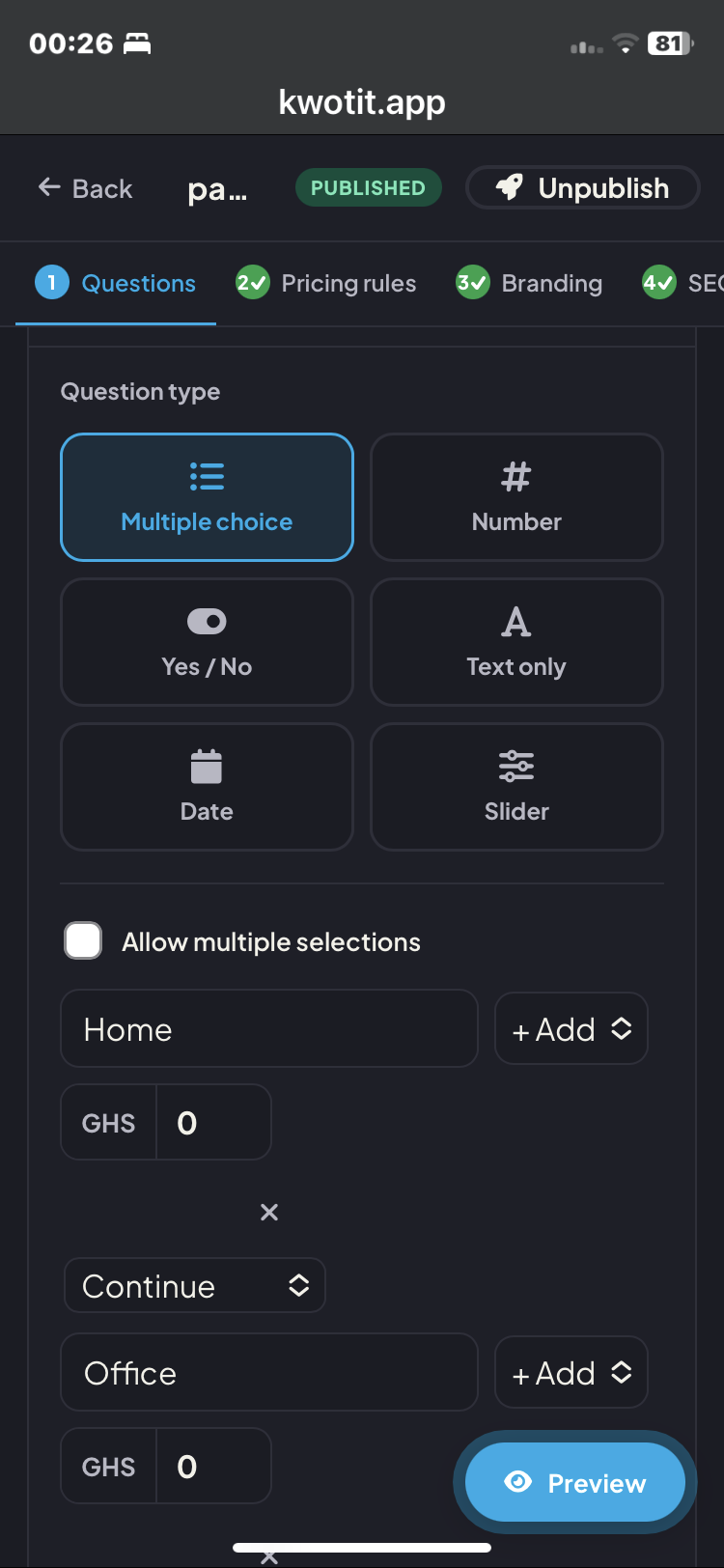
- Make one or more lead forms with different pricing questions.
- Use conditional logic. The next question changes based on the last answer.
- Show a live price while the customer answers.
- Save every lead in one dashboard.
- Turn a lead into a quote and an invoice.
- Collect payment through Paystack by card, mobile money, or bank transfer.
Example: what happens without a lead form
Serwaa runs Tamak Events. On Monday, Michael asks her for a funeral quote.
Serwaa spends five hours on the quote. She does all the calculations by hand. The price is GHS 45,000. She sends it to Michael.
Michael reads the message. He does not reply.
This is common. Some customers do not say no. They go quiet.
Now imagine Serwaa has a KwoTit lead form. Michael sees the GHS 45,000 estimate at the start. He decides it is too high and leaves. Serwaa loses no time. The people who continue are ready to talk about real prices.
(This example is an illustration. The names and amounts are not real.)
Step 7: Send clear quotes and collect deposits
When a serious lead arrives, send a clear quote. List what is included. State the total in cedis. Ask for a deposit before you book the date.
A deposit protects you from cancellations. It also shows that the client is committed.
Summary: the seven steps
| Step | Action | Result |
|---|---|---|
| 1 | Pick a niche | You focus on the work you do best. |
| 2 | Register your business | Clients trust you more. |
| 3 | Get a TIN | You can pay tax and work with larger clients. |
| 4 | Build a vendor list | You have backups for every service. |
| 5 | Set your prices | You make profit on each job. |
| 6 | Promote your business | More people find you. |
| 7 | Pre-qualify leads | You spend time only on serious clients. |
Frequently Asked Questions
How much money do I need to start an events planning business in Ghana? It depends on your niche and your scale. You can start small with no shop. Your first costs are registration, a phone, marketing, and a small working budget. Ask vendors about their payment terms to reduce what you pay up front.
Do I need to register an events planning business in Ghana? Yes, it is the safe choice. You register with the Registrar General's Department and get a TIN from the Ghana Revenue Authority. Registered businesses are easier for clients and corporate buyers to trust.
Which event niche is the most profitable in Ghana? Weddings and funerals often have larger budgets. But profit depends on your city, your costs, and how often you get bookings. Research your local demand before you choose.
How do I get my first clients as an event planner? Join vendor groups, post your work on social media, and ask people you know for referrals. Show photos of events you helped with, even small ones. Ask each happy client for a review.
What is lead pre-qualification for event planners? It is a check that happens before you send a quote. The lead answers a few questions and sees a price estimate. Only serious leads continue. This saves you time and stops unpaid quote work.
Can I collect payments by mobile money as an event planner? Yes. A tool like KwoTit uses Paystack, so your clients can pay by card, mobile money, or bank transfer. You can also collect a deposit first and the balance later.
Final thoughts
Starting an events planning business in Ghana is not hard. The hard part is to stay profitable. Pick a niche, register, know your costs, and protect your time.
If you want to stop losing hours on leads who never pay, try KwoTit. You can set up a lead form in minutes.